

Expert Tips on How to Pack Fragile Items for Moving
July 18, 2025
Whether moving everything to a new home or moving items into short- or long-term storage, one of the biggest tasks ahead of you is packing your belongings. As you begin packing, you will quickly find that not all objects fit into a tidy little square box. Unusually or oddly shaped items that don't fit into the mold of a square box are at greater risk of damage during a move. So, before loading your moving and storage container, check out our tips and tricks and see how to pack fragile items safely and securely for your upcoming move!
General Packing Tips for Your Move
Packing should be done at your pace to ensure you get everything secure and put away before the big moving day (which is why 1-800-PACK-RAT gives you as much time as you need to pack your stuff). Here are some tips for packing your belongings, whether mundane or unique.
Disassemble Bulky or Large Items
For unusually shaped items, always try to disassemble them by breaking them down and wrapping each piece separately. Doing this can help create extra space in your container for more stuff to be packed away. Packing materials should be placed inside the hollow section of any components for extra cushioning. You can also place styrofoam or a wood dowel along the length of any extra-long piece to act as a brace. Protect delicate elements and protruding or pointy parts with extra bubble wrap before wrapping the entire piece with a blanket or more bubble wrap.
Create Custom-Sized Boxes
While some items won’t fit neatly into a square box, combining boxes can create a custom-sized shape. Double stacking two same-sized boxes is a simple yet efficient technique for creating extra tall or wide, strong boxes that accommodate very tall, long, or wide items, similar to how one would pack valuable items like china. When combining boxes, securely tape the seams and seal the box with multiple layers of tape where the two boxes overlap, both on the inside and the outside of the boxes. Always test the strength of your box, especially if you’re packing heavy items. You don’t want a fragile box holding fragile items, after all.
Use Extra Packing Materials
Fragile, unusually shaped items require extra packing materials. This is not an area where you want to scrimp. Have plenty of packing paper, packing peanuts, bubble wrap, and tape on hand before beginning to pack. To ensure the stability of these items, it’s important to reinforce the bottom of the box with extra padding. Packing paper is relatively inexpensive and can fill empty spaces in boxes. Packing peanuts made of small pieces of styrofoam can also be used to fill empty spaces. If boxes aren’t fully packed, there is a potential for shifting and damage. Therefore, pack boxes as tightly as possible and fill any remaining space with packing materials, placing lighter items on top.
Fragile and delicate items should be wrapped before being placed in a box with packing peanuts or packing paper, as these materials do not provide sufficient cushioning on their own. Bubble wrap is best used to wrap around the most delicate items, such as fragile or decorative pieces, before placing them in the box. Protecting fragile items should be your top priority when you start the packing phase of your move.
Properly Label Items
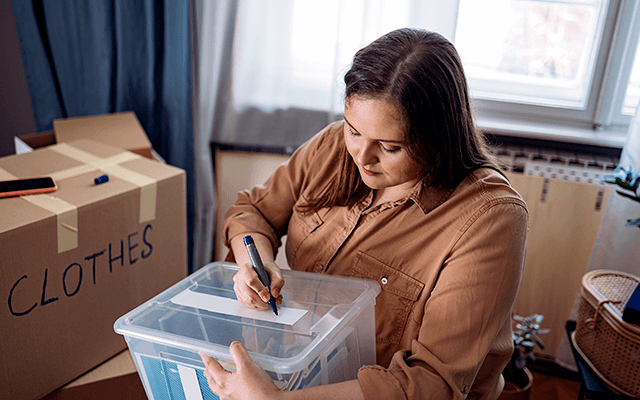
Label all sides of the packed item with the word “FRAGILE.” You may also want to include directions for how to carry it, such as “THIS SIDE UP” or “HEAVY ITEMS” as a guide. Another way to take extra care of your fragile belongings is to create an inventory system. This can be done with stickers denoting fragile products in the box or by making a color-coded checklist that can be cross-referenced with a list you have. Be sure to mark the boxes on all sides and the top so it is obvious what the box holds. That way, if your friends and family help you move, or you have professional labor assistance, you can easily direct where the boxes go and ensure they are handled safely.
Specific Tips for Packing Tricky Items
We all have some items, such as oddly shaped furniture or appliances, that require more finesse when it comes to selecting the right packing materials to pack them properly and securely. Here are some ways to pack your stuff to keep it secure during your move.
Packing Televisions
When moving televisions, most people loosely pack them into their moving trucks or rental containers. This heightens the chance of the TV falling over and cracking or shifting during transportation. Ensure the TV is loaded in the storage container where nothing heavy can be laid on top and doesn’t move around in transit. Usually, the best way to move a TV or a similar fragile electronic item is with its original packaging. However, a heavy-duty TV box kit will also help protect your television from potential damage when packed correctly.
Packing Furniture
It is best to disassemble your furniture by breaking items down into the smallest possible components for transporting. Label smaller pieces and place them in boxes. Wrap everything else in moving blankets to prevent scratches. Clearly label any screws, nuts, and bolts in a small plastic bag and tape it to the bottom of the piece of furniture or place it in the box with the smaller components. You will need to be able to find these items to reassemble your furniture upon arrival quickly.
Packing Large Appliances
Refrigerators, washers, dryers, stoves, and lawn equipment come with their challenges when packing your moving and storage container. The first step you can take is to clean these items and take off all removable parts. Drain lawn equipment and gas and oil tools before packing them, as these contents are flammable. It can be helpful to use manufacturer boxes and packaging if you still have them available for packing appliances. If not, secure moving blankets around appliances with packing tape to prevent damage. If you are unsure about handling large appliances, consider consulting with professional movers for guidance. Place these heavy items on the bottom layer of your storage container near the center.
Packing Floor Lamps
Remove the light bulbs and any lamp shades, and pack them in separate boxes. Wrap the floor lamp base in a moving blanket and secure the blanket with packing tape. Place it upright between two sturdy pieces of furniture to prevent it from shifting during transit.
Packing Mirrors and Pictures
Breakable items, such as mirrors and picture frames, require careful protection against knocks and bumps. Frame boxes are ideal for large picture frames, paintings, and mirrors. Each heavy-duty frame box should typically handle two or three paintings, pictures, or mirrors. When packing multiple frames in a single box, include a layer of bubble wrap between each frame for added cushioning. Use foam corners to protect the edges of the frames from scuffs or scratches. Use masking tape to create a star pattern across the glass front of the item to help prevent cracks or breaks.
Hanging Clothes
The easiest way to protect and move hanging clothes is with a wardrobe box. We recommend purchasing one if you can’t find one elsewhere—they are sanity savers! You can take clothes from the closet to the wardrobe box and then back to the closet, never leaving the hanger. Alternatively, clothes such as t-shirts, hoodies, undergarments, and the like can be folded and placed into a box, except for any expensive clothing or dresses that should be covered with plastic and carefully handled individually.
Packing Aquariums
Start by removing all fish and plants and placing them in a smaller transport container using some of the original water, and then draining the aquarium of water and drying it well. This will allow you to restart the bacteria culture when you set the aquarium back up. Use a strong box larger than the tank, and line the entire interior with thick bubble wrap. After placing the tank in the box, fill it with pillows, blankets, or towels, and ensure the whole box is packed full to prevent shifting during transit.
Packing Glassware and Dishes
When it comes to packing glassware, such as wine glasses and dishes, the goal is to ensure maximum protection against breakage. Wrap each glass item individually in a layer of packing paper or bubble wrap. For added security, use two layers around more delicate items and secure it with a piece of packing tape. Ensure that you tuck the edges of the wrapping under the base to secure them tightly. Place the heavier items, such as plates and platters, at the bottom of your box, stacking lighter pieces on top, which can be your wine glasses and other glassware. Use dividers if you have them for plates; this will prevent contact between surfaces and minimize scratches.
Have Your Packing Materials Ready
The last thing anyone wants to do when preparing for a move is to go out and purchase needed moving and packing supplies. If you need boxes, locks, moving blankets, tape, and similar items, 1-800-PACK-RAT can help! We have partnered with Lowe's® Home Improvement to bring you the most comprehensive range of moving and packing supplies. This includes TV-specific moving boxes, heavy-duty double-layered boxes, tape, and other related items. Everything you need is in one place and can be sourced at your local Lowe’s location or shipped to your home.
Make Your Move Simple With 1-800-PACK-RAT
We hope these solutions will be beneficial for packing and moving those unusual items that don’t fit neatly into a basic box. If you need help with an upcoming move, consider 1-800-PACK-RAT.
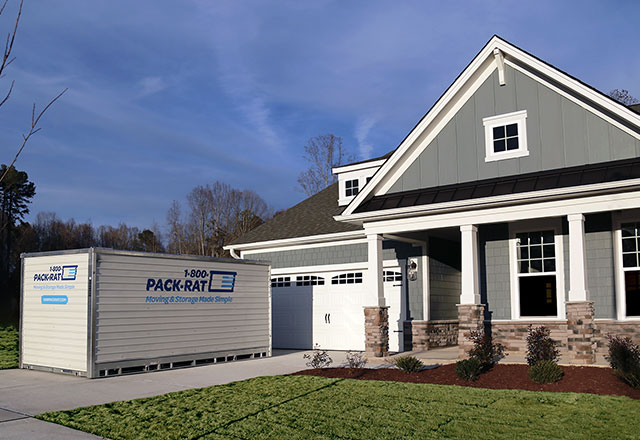
We make moving and storage simple by bringing the solution to you. No more driving a large, traditional moving truck all over the country or driving back and forth to a storage area. With 1-800-PACK-RAT, you have a portable moving and storage container that is brought to your home. Here's how it works: we deliver the container to you on your preferred delivery date. You can then pack it at your own pace and take as much time as you need. Once completed, we will collect your container and deliver it to your new location. Alternatively, we can store it in one of our nationwide warehouse locations for as long as you need. It is that simple!
Check out our space calculator to estimate the number of portable storage containers you might need to move or store your belongings. Give us a call today or get a free quote online right now to see how 1-800-PACK-RAT can simplify local and long-distance moving and storage for you! Be sure to also check out Lowe's Home Improvement for all of your moving and packing supplies today!
Frequently Asked Questions About How to Pack and Move Fragile Items
What materials are best for packing fragile items?
To pack fragile items effectively, use materials such as bubble wrap, packing peanuts, and foam sheets for added cushioning. Additionally, sturdy boxes are crucial for protecting these items during transit. Wrapping individual pieces in soft cloth or newspapers can also provide extra protection against potential damage while moving.
How do you determine which items require additional protection when moving?
To determine which items require additional protection during relocation, consider their material, shape, and value. Fragile items, such as glassware, ceramics, and electronics, require extra cushioning. Inspect for potential breakage points and ensure that unusually shaped items are securely packed to prevent damage during transport. Prioritize careful handling for these items.
What are the common mistakes to avoid when packing fragile items?
Common mistakes when packing fragile items include using inadequate cushioning, neglecting to label boxes as "fragile," and overcrowding packages. It's also crucial to avoid using weak or worn-out boxes. Instead, use bubble wrap, packing peanuts, and sturdy containers to ensure your items remain safe during the move.
How can I secure packed fragile items to prevent movement during transport?
To secure packed fragile items during transport, use bubble wrap, packing peanuts, or foam inserts to cushion them. Place these materials around the items in sturdy boxes. Additionally, seal boxes tightly with strong tape and label them as "fragile" to ensure careful handling.
- Moving Tips (133)
- Home Organization (28)
- News Releases (23)
- Packing Tips (21)
- Fun Stuff (19)
- Portable Storage (18)
- Storage Tips (12)
- In the Community (11)
- Moving and Storage Tips (11)
- Moving Checklists (9)
- Household Moving (7)
- Moving on a Budget (5)
- DITY Move (4)
- Moving Company Comparisons (4)
- Home Maintenance Tips (3)
- Home Buying and Selling Tips (1)
- Interstate Moving (1)


