

Top Tips for Using Moving Storage Effectively
April 08, 2026
Key Highlights of Moving Storage Tips
- Understand the key differences between various moving storage options, like portable storage containers and traditional self-storage units, and know which one will work best for you.
- Selecting the right temporary storage option depends on your budget, accessibility needs, and how long you need storage.
- Properly preparing, inventorying, and labeling your items is crucial for a smooth moving storage experience.
- Always compare costs, including potential hidden fees, to find the best value for your needs.
If you are moving soon, not all of your stuff may come with you to your new home. One common puzzle is figuring out what to do with your belongings when there's a gap between leaving your old place and settling into your new home. This is where moving storage solutions can be a true lifesaver. Using a storage provider who can provide both a secure place for your items, reducing stress and allowing you to transition at your own pace, and the flexibility to store your stuff wherever it is most convenient for you is the key. Let's explore some top tips to make your move go more smoothly, as well as some of the options you can use to achieve that.
Essential Tips for Using Moving Storage Effectively
Finding the right temporary storage can make all the difference during a move. It's about more than just finding a space; it's about finding a solution that fits your specific storage needs. When you start your search for storage services, consider factors such as location, security, and cost.
Look for a moving company that is transparent about its pricing and offers the flexibility you need. Reading reviews and asking for recommendations can also provide valuable insight, but only you know your exact needs when it comes to storing your stuff for a move. By taking the time to research, you can choose a reliable partner to keep your belongings safe and accessible when you need them most.
1. Choose the Right Type of Storage for Moving
When you're facing a move, you have several storage options to consider. The best choice for you will depend on your timeline, budget, and convenience preferences. The main choices include traditional self-storage facilities, full-service movers that offer storage, and portable containers. While some solutions may sound better than others, only one gives you the flexibility to both move and store your stuff on your schedule, wherever it is most convenient, and that is portable storage containers.
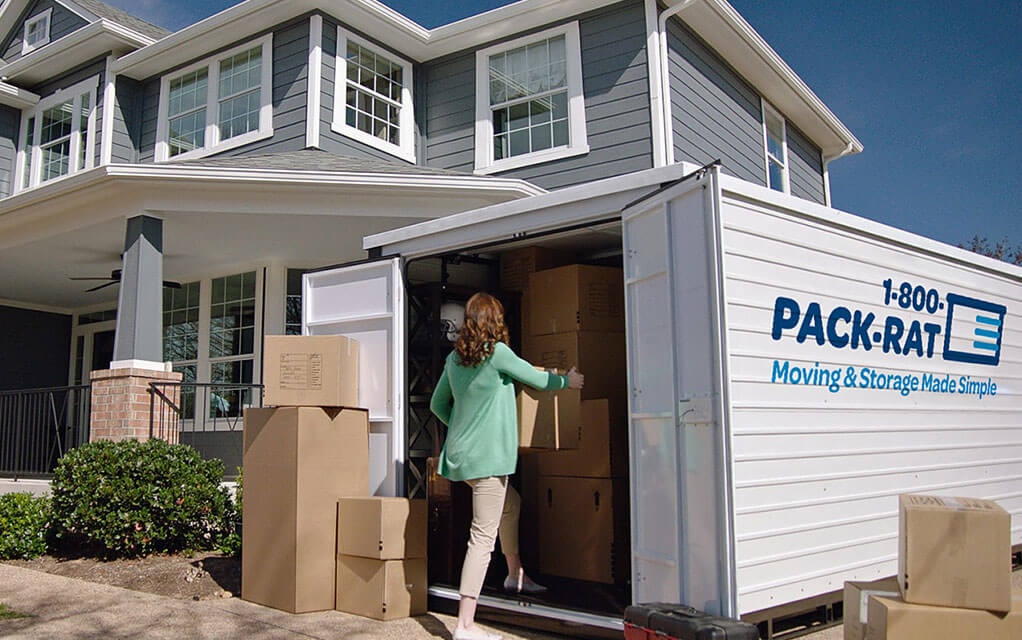
For both short- and long-term needs, like storing belongings for a few weeks between homes, portable containers are an excellent option. They offer incredible flexibility by bringing the storage directly to you. You can load your items at your own pace, and then the company can transport the container to your new home or a secure facility. Alternatively, you can keep your container on-site for as long as you need for 24/7 access to your stuff. No unnecessary driving necessary. Plus, your packed container doubles as a moving container as well whenever you are ready to move.
Traditional self-storage facilities, on the other hand, may offer a variety of unit sizes and seem like a cost-effective solution, especially for longer-term needs, but the amount of driving you will do and the cost changes after your first month can become a big hassle. You'll need to transport your items to the facility yourself, which means a lot of packing, driving, and unpacking on repeat. Full-service movers can also handle storage, but this is typically the most expensive option, and you won't have 24/7 access to your stuff or even know where it is at any given moment.
Portable storage containers are simply the better option for your moving storage needs!
2. Compare Portable Storage and Self-Storage Options
Deciding between portable storage containers and traditional self-storage is a key step in planning your moving storage. Portable containers are delivered to your home, allowing you to load your belongings just once. This eliminates the need to rent a moving truck and drive back and forth to a storage facility. They are ideal for both short- and long-term storage because the container can be stored on your property or at a secure facility.
Self-storage, on the other hand, requires you to transport your items to a facility. This involves more labor, and while you will get in on an intro rate, the monthly cost will quickly increase dramatically, especially if you need storage for many months. It isn't a good choice for anyone looking to save time or money, especially if they're moving at the same time and want their stuff to follow them to their new home!
3. Prioritize Accessibility When Selecting Moving Storage Containers
Your ability to get to your belongings is a critical factor when selecting a storage solution. If you choose to keep a portable storage container on your property, you'll have easy access to your items 24/7. This is perfect if you think you might need to retrieve something while you're packing or waiting to move into your new home. You can work at your own pace without worrying about facility hours.
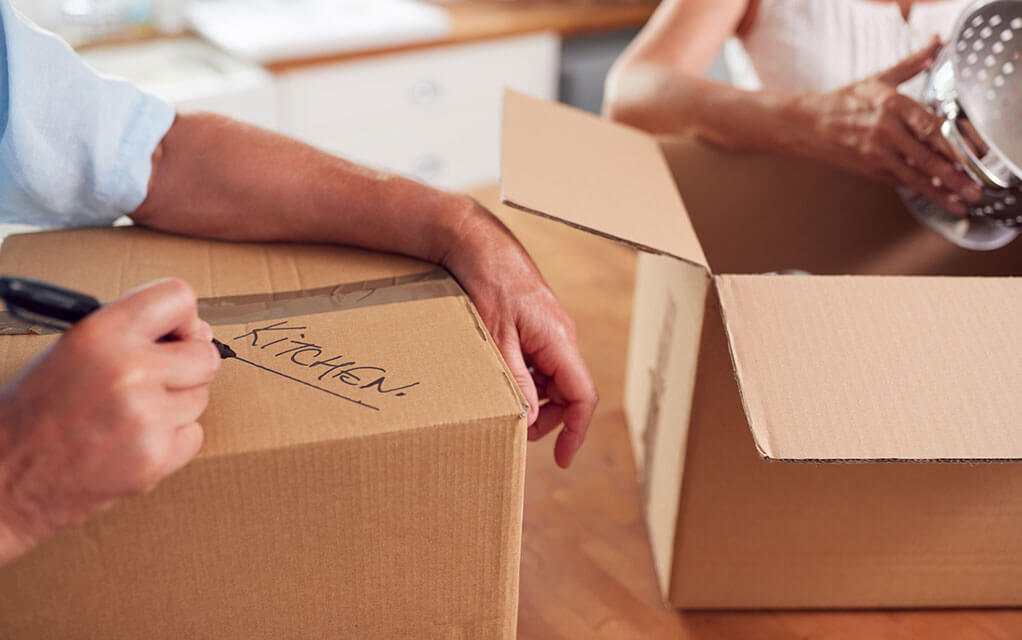
If your container is stored at a company's storage facility, you will need to check their access policies. Many companies allow you to access your container, but you might need to schedule it in advance. It's important to ask about the access hours and any procedures required before you commit. 1-800-PACK-RAT, for example, can stage your container outside their facility if you would like to access it there, or can deliver your container back to your home. We make storing simple by giving you the options that other forms of more traditional storage cannot.
In contrast, full-service moving and storage options often provide very limited or no access to your items once they are in storage. If you anticipate needing to grab things during the transition, this might not be the right fit for you. Always clarify the access rules to avoid any surprises later.
4. Consider Security Features for Storage During a Move
When you place your belongings in storage, you want peace of mind knowing they are safe. That's why evaluating the security features of any storage option is so important. Whether you choose a portable container or a traditional unit, look for robust measures that protect against theft and damage.
Reputable storage facilities often provide a multi-layered security approach. For portable containers stored at a company's warehouse location, inquire about the facility's overall security. This includes features like gated access, good lighting, and on-site staff. These elements work together to create a secure environment for your possessions.
1-800-PACK-RAT allows you to store your stuff on-site at your home, where you can keep your container locked up. If you opt to store it in one of our nationwide facilities, we can securely keep it for as long as you need, knowing that your container is accessible only to you and that the facility is monitored 24/7.
Many companies also offer insurance options for extra protection. It’s wise to check if your homeowner’s or renter’s insurance covers stored items, or if you need to purchase additional coverage from the storage provider. 1-800-PACK-RAT also offers various levels of content protection plans you can choose from to have extra peace of mind, both while you store and move your stuff!
5. Prepare Your Furniture and Belongings for Storage While Moving
Properly preparing your items for temporary storage solutions is essential to keep them in good condition. Before you start packing, take the time to thoroughly clean everything. Dust, dirt, and food crumbs can attract pests and cause odors or damage over time, especially during longer storage periods. This is even true for furniture pieces.
For large furniture, it's a good idea to disassemble what you can. Taking apart bed frames, tables, and desks not only saves space in the moving truck or storage container but also reduces the risk of scratches and breakage. Keep all screws and small parts in a labeled bag and tape it securely to the corresponding furniture piece so nothing gets lost.

Once cleaned and disassembled, wrap your furniture in protective materials. Old blankets or moving pads are great for this, as they are breathable and prevent moisture from getting trapped. This simple step will help ensure your belongings arrive at your new address looking just as good as when you packed them.
6. Inventory and Label Everything Before Storing
Keeping an organized inventory is one of the smartest things you can do when using moving storage containers or a storage unit. It might seem like an extra step, but it will save you a massive headache later when you're trying to find something. A detailed inventory list helps you keep track of every single item you've packed away.
You can create your inventory with a simple notebook or use a digital app. As you pack each box, jot down its contents and assign it a unique number. For an even better system, take photos of the contents of each box before you seal it. This provides a visual record that can be incredibly helpful.
Here are a few tips for effective inventorying and labeling:
- Label each box on multiple sides with its number and the room it belongs in.
- Be specific on your inventory list (e.g., "kitchen: dinner plates and bowls" instead of just "kitchen stuff").
- Keep a copy of your inventory list in a safe place, separate from your stored goods.
- Use color-coded labels to quickly identify boxes for different rooms.
1-800-PACK-RAT also has a moving checklist you can download and incorporate into your planning to get off to the right start for your upcoming move!
7. Store Items You Won’t Need Immediately
A great strategy for using extra space storage efficiently is to pack items you won't need right away first. Think about things you use infrequently. This approach allows you to focus on unpacking the essentials as soon as you arrive at your new home, making the settling-in process much smoother.
Seasonal items are perfect candidates for storage. This includes holiday decorations, winter coats, or summer sports gear. By placing these in the back of your storage unit, you free up space for more critical belongings. The same logic applies to business storage; excess inventory or archived files can be stored away until needed.

However, be careful not to store everything. You should always keep important documents, such as passports, birth certificates, and legal papers, with you. The same goes for irreplaceable valuables like jewelry or family heirlooms. It's best to keep these personal and valuable items with you during the move.
8. Use Protective Materials for Fragile or Valuable Belongings
Protecting your fragile items during a move requires extra care and the right protective materials. Things like dishes, glassware, and artwork can easily break if not packed correctly. Taking a few extra minutes to wrap them properly will ensure they arrive at your new home in one piece.
Always wrap each fragile piece individually. Bubble wrap, packing paper, and foam sheets are excellent for this. For especially sensitive items, such as electronics or wooden furniture that could be affected by temperature fluctuations, consider a climate-controlled storage unit or a storage provider that has a climate-controlled facility to keep your stuff safe. This feature maintains a stable temperature and humidity level, preventing warping, cracking, or mold.
Here are some tips for protecting fragile belongings:
- Use sturdy boxes and fill any empty spaces with packing paper to prevent items from shifting.
- Place heavier items at the bottom of boxes and lighter ones on top.
- Clearly label boxes with "FRAGILE" on all sides.
- For mirrors and pictures, use special picture boxes for a better fit.
If you are in need of packing or storage supplies, we have partnered with Lowe's® Home Improvement to help get you all of the supplies you need for your journey!
9. Maximize Space with Smart Packing Techniques
Making the most of your storage space is key to an efficient move. Smart packing not only helps you fit more into your unit but also keeps your belongings organized and protected. The goal is to find the perfect fit for everything without cramming items together, which could cause damage.
Start by using boxes of uniform size when possible, as they are easier to stack. When loading your moving storage unit, place the largest and heaviest items at the bottom and along the back wall. This creates a stable base for stacking lighter boxes on top. Think of it like a game of Tetris, fitting pieces together logically.

Try these smart packing techniques to maximize your storage space:
- Disassemble furniture to make it more compact.
- Use furniture with drawers or cabinets as extra storage for small, non-fragile items.
- Stack boxes vertically to take advantage of the unit's height.
- Leave a small walkway down the center of the unit for easy access to items in the back.
10. Avoid Storing Prohibited or Hazardous Items
Every storage facility or provider has a general list of prohibited items that cannot be stored in their units for safety and liability reasons. It is crucial to know what these are to avoid any issues. Most of these restrictions are in place to prevent risks like fires, explosions, pests, or damage from extreme temperatures.
Hazardous items are at the top of the "do not store" list. This category is broad and includes anything that is flammable, corrosive, or toxic. You are also not allowed to store perishable goods, as they can attract pests and cause unpleasant odors, which can lead to an infestation that could affect other units.
Common prohibited items include:
- Gasoline, propane tanks, and other flammable materials.
- Paint, chemical cleaners, and fertilizers.
- Food, pet food, or any perishable goods.
- Plants and live animals.
- Ammunition and fireworks.
Always check with your storage provider for their specific list of prohibited items before you start packing.
Tips for Labeling and Inventorying Your Stored Items
One of the best ways to reduce moving stress is by having a clear system for labeling and inventorying your belongings. When you use storage solutions, knowing exactly what is in each box and where it is in the storage unit can save you a lot of time and frustration. A good labeling and inventory system is your roadmap to an organized move.
This process doesn't have to be complicated. With a few simple tools like markers, labels, and a notebook or app, you can create a detailed record of everything you're storing. Let’s look at how to properly label your boxes and set up an effective inventory.
Proper Way to Label Your Moving Boxes
Effective labeling is more than just scribbling "kitchen" on a box. A detailed labeling system will make unpacking your moving storage boxes a breeze. The key is to provide enough information on the outside of the box so you know its contents without opening it. This is especially helpful when your items are in storage, and you need to find something specific.

Start by getting some good-quality markers and labels. You can use color-coded labels to assign a color to each room, making it easy to see where a box should go at a glance. When you write on the box, be sure to do it on at least two sides so the label is visible even when boxes are stacked.
Here's how to label your boxes like a pro:
- Assign each box a unique number.
- List the general contents (e.g., "books," "sweaters").
- Note the room it belongs in (e.g., "Living Room," "Master Bedroom").
- Add a "FRAGILE" warning for any boxes with delicate items.
Labeling boxes and bins with a simple system that helps with box placement in your new home will streamline the unpacking process and assist with any storage needs you may have during your move.
How to Set Up a Moving or Storage Inventory
Creating an inventory is your master guide to everything you've packed for storage while moving. It works hand in hand with your labeling system and is invaluable for keeping track of your belongings, especially if you have excess inventory from a business. Most storage companies will recommend that you create one for your own records and for insurance purposes.

You can create your inventory list using a simple spreadsheet, a dedicated app, or a physical notebook. The goal is to match the number on each box to an entry on your list. Your inventory should be detailed enough to help you remember what's inside each box, which is particularly useful for long-term storage.
Follow these steps to build a helpful inventory:
- List the unique number for each box.
- Write a brief but clear description of the box's contents.
- Take a photo of the contents for a visual reference.
- Note the condition of valuable items before packing them.
- Keep a digital and a physical copy of your inventory in a safe place.
Comparing Moving Storage Providers and Costs
When you're searching for moving storage solutions, it's easy to get overwhelmed by the number of storage companies out there. The key to finding the best deal is to compare providers not just on the monthly rental fee but on the total cost. Look for competitive pricing, but also consider what you're getting for your money in terms of service and convenience.
Remember that many fixed storage locations will offer you a great sounding deal, but that is typically an introductory price. Pricing for these storage areas often increases, and does so rather drastically in the second month and beyond.
To compare costs effectively, you'll need to get quotes from at least three companies, and keep in mind that solutions such as portable storage don't require you to drive back and forth to an off-site storage location if you keep your container on-site.
Researching Affordable Storage While Moving Alternatives
Finding affordable storage during a move is a high priority for many people. While large, well-known brands are popular, there are often many other great alternatives that offer excellent service at competitive prices and save you time and money by bringing the solution to you. Taking the time to research different options can lead to significant savings on your temporary storage costs.

Many local and national moving container companies offer services that are just as reliable and convenient. When you're looking for the right choice, don't just focus on the name. Instead, compare what each company offers in terms of container quality, flexibility, and customer service. Reading recent customer reviews can give you a good sense of a company's reputation. Also, be sure to read the company's responses to reviews, as this can be a good indicator of whether the company provides quality customer service in the event you have an issue during your moving or storage project.
Factors That Influence Storage Costs for Moving
Several factors come together to determine your final storage costs. Understanding these variables will help you budget more accurately and avoid any unexpected expenses. The size of the storage unit you need is one of the biggest factors; a larger unit will naturally cost more than a smaller one. For example, 1-800-PACK-RAT offers three portable container sizes: 8ft, 12ft, and 16ft. The bigger the size, the higher the rental rate will be - this is true across all competing portable storage providers and fixed traditional storage companies. To find your ideal portable storage container size, use our space calculator tool and download our weight limit calculator sheet!
The duration of your rental also plays a significant role. Some companies may offer discounts for "long-term" rentals, but the total cost will increase the longer you store your items, and the rate may also increase over time. The location of the storage facility can also impact the price, with facilities in urban areas typically costing more. The same goes for portable storage: you can expect to pay a bit more if you keep your container at the company's warehouse vs. on your property or on-site.
Let 1-800-PACK-RAT Make Moving Storage Simple for You
Getting adequate storage for your stuff during a move shouldn't be a hassle, and finding a moving and storage partner who can do both is vital. That is where 1-800-PACK-RAT comes into the picture. No more looking for both a mover and a storage company - we can do it all for you and bring it directly to your location! No more driving all over town or across the country to move or store your stuff!
Here is how 1-800-PACK-RAT works: we bring a portable storage container to your location on your schedule, so you can pack at your own pace. When you are done, we will either pick up your container and deliver it to your new home or keep it in one of our nationwide warehouses for safekeeping for as long as you need. Alternatively, you can keep your container on-site for as long as you need, accessing it whenever necessary. It is that simple to move and store your stuff with us.
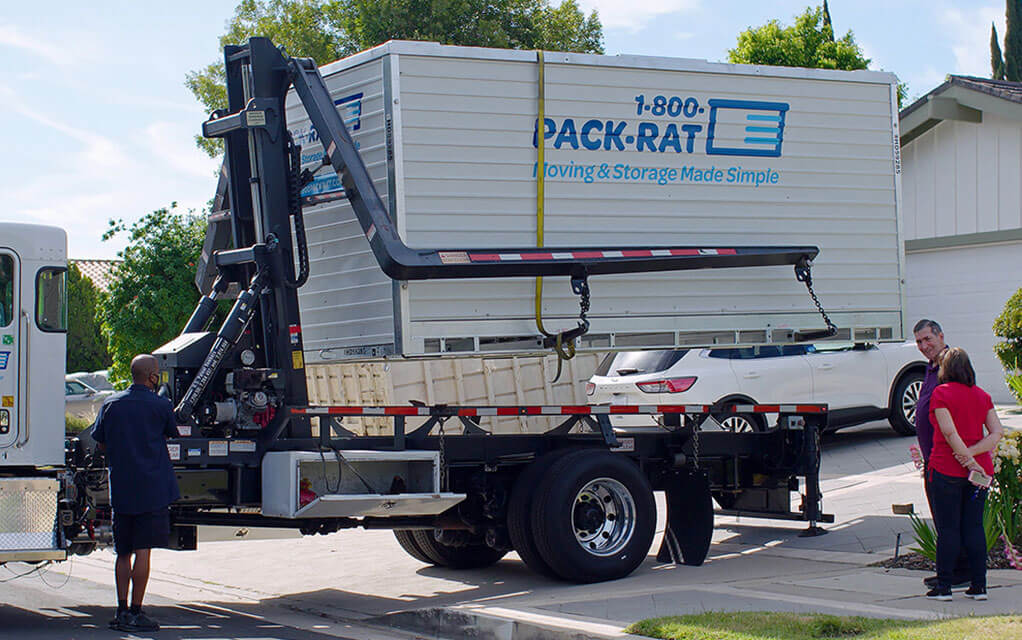
Whether you are making a local or long-distance move or need to store your belongings for a short or long time, 1-800-PACK-RAT is here to help! Give us a call or go online for a free quote now to see how we can make moving and storage simple for you!
Frequently Asked Questions About Moving Storage
What are the costs associated with using moving storage services?
Storage costs typically depend on unit size, rental duration, and storage type. Many fixed storage locations offer an introductory rate that they will then increase significantly after the first month, so keep that in mind when considering this option. You will also need to factor in any costs of moving your stuff back and forth to that storage area. This can include fuel, possibly renting a moving truck, and the time you spend doing it. Portable storage makes it simple by eliminating those costs by bringing the storage to you.
What are the best moving storage options for short-term needs?
For short-term needs, portable storage containers are an excellent temporary storage option. These mobile units are delivered to you, saving you time and effort normally spent shuttling your stuff back and forth to a traditional storage area, while offering the same storage capabilities. Our containers also double as moving and storage containers, meaning if you are storing stuff in anticipation of a move, you only need to load and unload your container once, and we will handle all the necessary transportation.
How do I prepare my belongings for storage during a move?
To prepare your belongings, clean everything thoroughly before packing. Use protective materials like blankets and bubble wrap for fragile items. Create a detailed inventory and use a clear labeling system for all boxes. This ensures your items stay safe in moving storage containers or a storage facility.
How long can I typically keep my belongings in storage?
When you store your stuff with 1-800-PACK-RAT, you can keep your stuff in storage for as long as you need. The best part is, you can keep the storage on-site at your home or location, or keep it stored securely in one of our nationwide warehouse locations for as long as you need. There is no limit to how long you can keep your container - either on your property or in our warehouse.
How can I determine the right size of storage unit for my move?
1-800-PACK-RAT has a handy space calculator to help you determine how big a container you might need. With three sizes to choose from, we understand that you will want the right container for your moving storage needs. You can also speak with one of our helpful moving and storage experts who can help you pick out the best size container for your needs. And know that if you need another container for your stuff, we can send one out to you as soon as possible!
- Moving Tips (133)
- Home Organization (27)
- News Releases (23)
- Packing Tips (21)
- Fun Stuff (19)
- Portable Storage (16)
- In the Community (11)
- Moving and Storage Tips (11)
- Storage Tips (10)
- Moving Checklists (9)
- Household Moving (7)
- Moving Company Comparisons (5)
- Moving on a Budget (5)
- DITY Move (4)
- Home Maintenance Tips (3)
- Home Buying and Selling Tips (1)
- Interstate Moving (1)


