

Essential Tips for a Smooth Business Relocation
May 22, 2025
Key Highlights of Tips for Moving Your Business
- Relocating a business requires careful planning and consideration of various factors, such as commute times, real estate, and tax incentives.
- Choosing the right new location can impact employee satisfaction, customer loyalty, and operational efficiency.
- Portable storage solutions from 1-800-PACK-RAT simplify the moving process with secure, flexible options.
- Successful business relocation demands a strategic approach, including creating a detailed plan and leveraging suitable moving services.
- Employees and stakeholders must be well-informed through clear communication via social media, marketing materials, and the company website.
- A robust relocation checklist ensures that no critical task, like transferring your technology stack or updating business insurance, is overlooked.
Moving your company to a new location can be both exciting and challenging, especially if you have many employees to manage. To have a successful business relocation, your plan should focus on ensuring your customers experience as few interruptions as possible and that your employees are updated throughout the process. When you pick a new space or tell your workers and clients about the move, make sure each step meets your business needs.
That is why you need to follow specific steps to ensure you have everything you need to make your move happen on time and maintain business continuity. You will also need to work with service providers such as ISPs, banks, movers, etc., to ensure your business has the necessary support to get from point A to point B quickly and efficiently.
When it comes to moving, 1-800-PACK-RAT is here to support you at each step of the process. Let us help you get started with some tips on relocating your business!
Understanding Business Relocation
Moving your business to a new location is a big step. This choice can affect how the business runs, your people, and the clients. Sometimes, you have to move to grow, save money, or hire people with the right skills. But you need to think carefully about each step of your move before you do it.
When you move a company, many considerations have to be made, such as finding real estate, specific moving requirements for your company, and how to move everything. You might need a bigger office space, want to meet market changes, or have inventory you need to securely store temporarily until your move is fully completed. If you plan well, this work will help you in the long run. Let's look at what moving a business means and why it can be good, so you can see all sides.
What Is Business Relocation?
Business relocation means moving some or all of a company to a new location. This can be as small as changing offices within the same city or as big as moving to a different state or country. Your real estate needs and type of business will help decide how big this process will be.
There are many reasons for a move. Most often, it is to help the business grow or to fix some problems. Companies might move to a new location to get more space, be closer to important places, or improve how easy they are to reach. Others may want lower costs, such as cheaper rent or tax incentives.
For example, a shop may move to a busy city area to attract more foot traffic. Tech firms, on the other hand, may choose spots with short commute times and a good supply of workers. No matter why, every move should be carefully considered and planned. This helps prevent big problems and keeps costs from going up too much.
Benefits of Relocating Your Business
Relocation is a key step to starting business growth and helping your company work better. When your business gets bigger, you may need new or bigger spaces for your team to work in. This can boost how much your team gets done. Being close to skilled workers will also give you and your company good, long-term benefits.
Moving to a new location can improve your team's quality of life and job satisfaction. It can reduce commute times, provide better roads and buildings, or help everyone live in a safer area. When your team has these things, they may like their jobs more and want to stay longer. As a result, people who own and run the business can gain higher morale from staff and see better work output.
Relocating also makes it easier to plan for future expansion. You can do this by finding markets that are right for you or places with tax incentives and lower utility rates. When companies pick a suburban spot, there is a chance for growth without the high costs found in large cities. If businesses manage the move well, they can enjoy these benefits and not let moving problems stop them.
Preparing for Business Relocation
Getting ready to move your business starts with some analysis and good organization. Careful planning helps you find key factors like possible new office space, potential locations, and costs. This ensures that the move matches your business needs.
You have to think about employees, technology setup, and other details, too. Moving doesn't just change your office space. It also affects customer experience, employee happiness, and company efficiency. Using a simple and structured approach makes the move smoother, and fewer problems occur. So, start by looking at what you need and what key factors matter most before making a decision.
Initial Considerations Before Making the Move
Every move to a new location should start with careful consideration. First, you need to think about why you are moving and how to do it. Does the move help with your business growth, or does it solve any problems you face now? Some key factors to look at are the good things you could get, the costs, and any problems with moving to a new space.
Depending on the type of work your business does, you also have to consider how this change might affect your customers and your team. Will the new space improve the quality of life? Be sure to check commute times, whether the place is close to restaurants, grocery stores, etc., and whether there are enough people you can hire in that area with proper living arrangements available. When your plans match your goals, the move will make more sense.
It is also smart to look closely at the costs, tax incentives, state rules, and any local laws or zoning you need to follow. If you plan well from the start, you can avoid surprises when moving. This lets you focus on the good things you can get and not the setbacks. Moving smoothly to a new location sets you up for good results in your new space.
How to Choose the Right New Location
Your new location can help shape where your company goes next. If you have a retail business, start by looking at foot traffic and locations with convenient roads to get to and from the business. More people walking by and being able to get in easily can help you make more sales, while a storefront near a busy intersection with other stores and a good parking lot can help draw in more people. If the location is easy to get to and out of, it can also build better customer loyalty.
You should also consider commute times for the majority of your team. If the place is easy to get to, your people will be happier and more likely to stay. But if getting there is too hard or takes too long, some may not want to work there for long. You might need to consider work-from-home options for some of those employees if their commute time is actually increased, or ease up on expectations for work hours.
Doing an employee survey before planning a move can help reduce employee stress and give you a general sense of your employees' sentiment about moving the office or business location.
Also, check the cost of living in the area. Lower costs from things like rent, utility rates, or taxes can help your business keep more money. Look for tax credits that some industries get in certain places, as this can help your business save even more. Consider whether the space works for all your needs right now and has enough room for future expansion.
Beginner's Guide to Business Relocation
Moving your business to a new location means you need to know about important resources and the right ways to do things. You should also consider how much space you will need, your budget, and what opportunities may arise in the future.
This guide will help you cover every part of the move, from hiring moving companies to evaluating capital investment for your new business space. Stay prepared by making each step easier and clearer. Read on to find the key things that will make your move smoother and better.
Essential Resources Needed for Relocation
Relocation requires careful planning and key resources to keep everything running smoothly. First, you need to work with a moving company that knows how to handle office moves and can provide convenient and safe on-site and warehouse storage if needed. Their help will ensure that the moving process and logistics go smoothly, especially if you go with a company that can handle all the driving for you.
Next, make sure your new office space fits your business needs. It should allow for growth and have all important services ready before you move in. Whether your business deals with retail or tech, the right office space will cut costs and help things run better.
You also need to consider capital investment in areas like upgrading IT or setting up furniture in your office space. Setting aside enough budget ahead of your move makes everything stronger and ready when you start work in the new place. Work closely with everyone involved to be sure you spend resources in the right way.
A Step-by-Step Process for Business Relocation
Relocation success comes from careful planning at every step. Here are some things you can do:
- Assess your requirements: Consider your ideal location, the needs and happiness of your employees, and how your business will work in this new space.
- Notify stakeholders: To avoid any issues, inform employees, customers, clients, and partners about the move before it happens, preferably before the planning stage even happens.
- Hire professionals: Get help from a moving company that works with businesses and knows how to handle these unique relocations. A company that can provide seamless storage options should also be considered.
- Update assets: Move your technology, office supplies, and online platforms to the new space. Plan this well ahead of time to minimize interruptions to your business.
- Final setup: Check that all utilities and equipment are working and set up in the new space.
If you follow this plan, you will encounter fewer problems when moving from your previous location to the new space.
Step 1: Create a Detailed Relocation Plan
Every successful business relocation needs a strong plan. You should make a clear list of your short- and long-term goals. This will help ensure everything follows your vision for this relocation. Essential items such as finding a new location for your business, setting up a new corporation, or updating your change of address on all platforms should all be done six months to a year out from any planned move date.
Focus on important tasks such as working with your accounting or finance team to inform the IRS of your change, transferring, updating, or applying for any needed licenses, and planning out the setup schedule for your key utility providers.
Be sure to also build some extra time into your schedule for things you can’t predict, like delays during real estate talks or issues with technology transfers. Breaking down the move in this way makes it easier to handle all the parts, from logistics to deadlines.
If you deal with problems early and build in extra time for potential holdups, you help make the move to your new location less stressful. This prep work sets you up well for what’s next.
Step 2: Communicate with Stakeholders
Proactive communication can help reduce problems when you move. Use social media, marketing materials, or your company website to let everyone know about plans early. Being open builds trust and helps your clients feel good about your services. Transparency is key to avoiding a buildup of issues from those who support or work with your business.
Tell all employees about new timelines, any changes, and what you expect from them. If people worry about commute times or if their main tasks will change, work with your Human Resources and Technology team to devise a plan for a new hybrid or work-from-home model to make life easier for your team. Give clear advice so your team can handle the move better and know what to expect in the coming months. Uncertainty can lead to stress and anxiety, so be clear about what is happening throughout the process.
Also, keep in touch with your partners and suppliers from the beginning of the process. Let them know what's happening so there is no mix-up in deliveries or planning. When everyone knows what’s going on, the move goes better for all.
Step 3: Coordinate with Moving Services
Working with a reliable moving company makes moving your office to a new location much easier. Working with a company that allows you to set your preferred date and have moving solutions that require no logistical planning or transportation on your part are even better.
Start by checking if they have worked on company moves before. Experience in these types of moves is key - whether it is moving assets or working with your team for employee relocations to help move them closer to the new company location, having the experience necessary is vital. Give them your timeline and work with them closely to set up a schedule of events that you and your team can follow. Also, see if they have the certifications needed, like filings with the Secretary of State for your state regarding the move.
A mover that can also provide seamless storage for your company should also be a significant driving factor. For example, 1-800-PACK-RAT can help you move your business assets from one location to another, or help your employees move to a new home to be closer to your new office or location.
Our portable moving and storage containers can also double as a secure storage unit that you can keep at your business location safely and securely for as long as you need. It can sit in a standard parking space and be packed over time with your stuff, and when you are ready, we can move it to your new location or store it in one of our nationwide, secure storage warehouse facilities.
Choosing the right mover can make your entire move easier or far more challenging than it needs to be. Consider 1-800-PACK-RAT for making it simpler on all accounts!
Step 4: Transfer Your Utilities, Technology Stack, and Key Providers
Moving your technology stack without mistakes is absolutely crucial to maintaining business continuity. If you need a point-of-sale system set up on day 1 or data servers linked to a back-end system to take online orders, your IT and tech teams need to be able to hit the ground running before you move into your new space fully. Look at all your current equipment to see if it works well with upgrades made for the new space.
Speak with your technology providers and ISP during the planning stages and after you have selected a new location to move to. Inform them of any potential roadblocks, new setups, or legal/logistics issues you might have. Ensure your tech team or technology partner is working with the right vendors on all necessary technology assets, moved and ready for work when needed. This is also the time to start working on a backup solution you can use while your new location is being set up, and in case you need a reliable failover if something goes wrong.
If you are a smaller business, you can try leaning on your ISP for support or contact a vendor that specializes in helping businesses make location transitions. In a world dominated by online orders and instant messaging, you must ensure your technology is ready to help your customers and employees do what they need to do when you move in.
Step 5: Set Up at the New Location
After you move in, it's important to make the new space fit your business needs. This could be a great time to potentially change the office layout or add more individual office space. If you are a larger company, the employee survey previously mentioned can come in handy at this point, allowing you to set up the new office space in a way that your employees would enjoy working in. Keeping your employees happy should always be one of your key initiatives, as a happy team leads to better quality work and morale. Use a new office space to fit your employees' expectations and needs.
Small businesses can also use this opportunity to set up their businesses in a way that makes more sense for them and their customers. Any lessons learned from their previous location can be applied to this new spot to ensure they are getting the most out of their new space.
Before opening your office or business location, do a thorough dry run of all key systems and technologies to check if everything works. Ensure your Wi-Fi works everywhere it should, that your team can access key systems, and that entry key cards work. Anything that can affect your business should be tested before you open your doors.
Last, ask employees what they think about getting around and working in the new space, and consider what they say to make small changes to improve efficiency and morale. This can help everyone be happier at work and get more done.
Utilizing Portable Storage Solutions
If you are moving or just need storage during an office or business relocation, portable storage containers can make your workplace transition much easier. Businesses use them because they are a good option that saves money and keeps gear and office furniture safe and can be used to help relocate employees if needed.
Companies like 1-800-PACK-RAT offer moving and storage services made to fit what your business needs without the hassles associated with using traditional moving trucks or driving back and forth to off-site traditional storage areas. This can help you move things faster and keep everyone, including your team and you, less stressed.
Benefits of Using 1-800-PACK-RAT for Business Moving
Portable storage solutions from 1-800-PACK-RAT help businesses move with ease. Our containers are all-steel and resist the weather and elements, keeping your stuff safe regardless of location. If you need to move assets from one location to another, we can deliver you a container that you can pack at your own pace and then move it to your new location when ready to unload. Alternatively, we can leave the container on-site at your business for as long as you need for 24/7 access, or we can store it in one of our local and secure storage warehouse locations until you need it again. The best part is, there is no driving on your part - we handle all the logistics and transportation so you can focus on your business's moving transition.
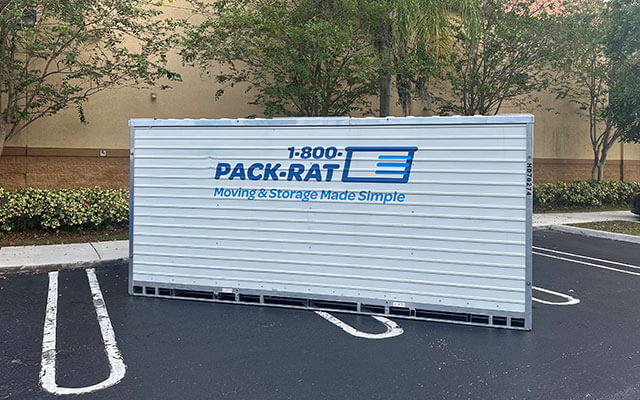
We can also provide your employees with local and long-distance relocation services if they need to move closer to your new location. Here is how it works: we deliver a portable container to their home that they can pack for as long as they need. When ready, we will pick it up and deliver it to their new home or store it in our facility for as long as they need. We make moving and storage simple for both you and your employees.
Letting us handle logistics and transportation enables you to focus on other key aspects of your move. We know transitioning a business to a new location takes a lot of planning and coordination - let us take some of that stress off your plate today!
How to Efficiently Pack and Store Items
Packing well cuts down on lost time when you move. To do this, start by sorting your things by what is needed first. Group your files, tools, and furniture, and begin packing what you aren't using or is needed right now. Remember that our 8', 12', and 16' containers all have specific weight limits when loading your container. Be sure to stay within these limits and distribute the weight of your heavier items equally across the container floor so you don't overload it. An overloaded container can sway during the pick-up and transportation process, causing damage to your container and our vehicles.
When packing your business's stuff, apply basic packing and moving tips to the job - at the end of the day, it isn't that much different from making a move yourself! Add clear labels to make it simple to find things or coordinate with any professional third-party moving assistance providers to create an inventory system. Having a color-coded or numbered system to track which boxes have what will make the unpacking process quick and increase your business's uptime.
Pack any breakable items carefully and label any boxes or containers with such items very clearly so they do not get damaged on the way. You can use dual-layered, heavy-duty boxes or strong polypropylene boxes for long-term storage, as they keep things safer during moving.
Remember that 1-800-PACK-RAT allows you to begin packing your stuff early and store it wherever you need it. The flexibility our containers provide for our customers and their needs is unmatched.
Let 1-800-PACK-RAT Assist with Your Business Relocation Needs
For business storage and relocation assistance, you can trust that 1-800-PACK-RAT has your back with a moving and storage solution that works. With several container sizes to choose from and locations across the continental United States, we are here to service your business's needs today.
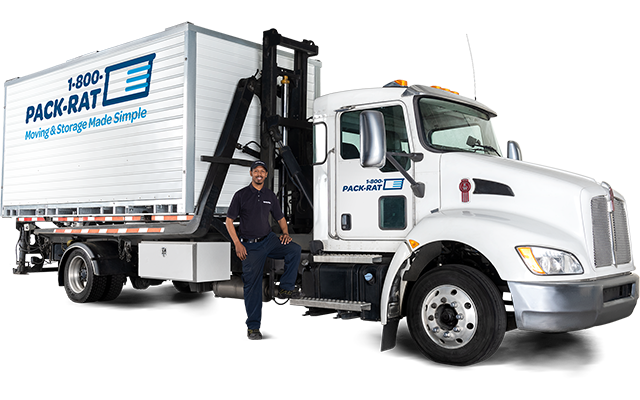
Let us help take the stress out of moving and storage - call us today or go online for a free quote to get started and see how simple moving and storage can really be for your business relocation needs!
Frequently Asked Questions About Business Relocations
What are the common challenges in business relocations?
Legal rules, moving problems, and moving team members are some of the main challenges business owners face. Decision makers also need to coordinate different vendors, timelines, and other details to ensure as little downtime as possible. Work with your HR and tech team or an agency specializing in business moving transitions to help set everything up correctly.
How long does it typically take to relocate a business?
The timeline for relocating a business can vary greatly depending on the operation's size and the move's complexity. Typically, companies should plan for a transition period ranging from a few weeks to several months. This includes evaluating potential new locations, securing leases, organizing packing schedules, and executing the actual move. Setting realistic timelines is crucial. Start by creating a detailed project plan highlighting key milestones such as finalizing the new location, notifying employees, and coordinating with moving service providers like 1-800-PACK-RAT.
How can employees prepare for a business move?
Employees can follow the company guidelines to pack up their desk things and adjust their personal timetables. If you tell them about the new location early, it makes the move much easier for them. Encourage them to speak with their managers or HR if they have concerns. It might also be beneficial to consider a work-from-home or hybrid work option to ease into the move.
What are the best practices for communicating a move to employees and clients?
Use a good communication plan to give people early notice. Share news by email, on social media, or during meetings. Be open about when things will happen and what to expect, so everyone, including your employees and customers, knows what is happening.
Are there any legal or regulatory considerations to keep in mind when relocating a business?
Yes, you have to look at state regulations, tax rules, and business registration when you move to a new location. Make sure you file the needed paperwork with the Secretary of State and any other local or federal officials. This step helps you comply with the law and keeps your work going well in the new place.
- Moving Tips (133)
- Home Organization (28)
- News Releases (23)
- Packing Tips (22)
- Fun Stuff (19)
- Portable Storage (18)
- Storage Tips (12)
- In the Community (11)
- Moving and Storage Tips (11)
- Moving Checklists (9)
- Household Moving (7)
- Moving on a Budget (5)
- DITY Move (4)
- Moving Company Comparisons (4)
- Home Maintenance Tips (3)
- Home Buying and Selling Tips (1)
- Interstate Moving (1)


