

Simplify Your Move with These Packing Tips
May 29, 2025
Packing up everything you own and moving to a new home can be a stressful and challenging task. Additionally, moving can leave you feeling a mix of emotions, including surprise, excitement, anxiety, relief, and many others simultaneously. The packing and moving tips below can hopefully relieve some of your anxiety. The easiest way to reduce stress is to have a plan! As with most things in life, the more organized you are before moving, the better the outcome, especially if you use a moving company that saves you time and effort.
Preparing for Your Move
First and foremost, use a moving checklist and begin to lay out everything you need to do from now to your moving day. This includes coordinating with a moving partner well in advance of your move, especially if you plan to move during the peak moving months of May to July. Securing your preferred move dates should be the first thing to accomplish on your list, as there are numerous moving companies and solutions to choose from. Finding the most flexible, cost-effective, and professional solution available should be a priority.
Once you have a moving partner selected, you can then start on the rest of your list, as you now have a firm moving date on the schedule. You can begin to work backwards from that day, laying out the key dates for when certain things need to happen. You can never have enough time to plan your move, as things will begin to move quickly as you approach the day. If you plan and prepare far enough in advance, you can take care of key things such as decluttering, donating, setting up, and shutting off utilities.
When selecting a moving partner, be sure to choose one that works on your schedule and provides the simplest solution possible. Moving is difficult, and if you work with a traditional moving truck company or a portable container company that offers a containerized solution that is too small or containers that cannot match the competition, the moving day itself can be hectic, regardless of how well you have planned and packed your belongings.
Tips and Tricks for the Easiest Way to Pack and Move
Packing the right way is vital - it helps ensure your belongings, including larger items, stay safe during the journey and are easy to unpack once you arrive at your new home. Here are some tips that you can incorporate into your moving plan to help make the process go a bit more smoothly. The packing process should start the moment you have a confirmed moving date, or at least a couple of months in advance of when you have a specific moving date in mind.
Declutter before you start packing your stuff
Don’t make more work and stress for yourself by moving unnecessary items. Decluttering provides a great way to remove items from your home that you no longer want or need. If there is a box of items you haven't seen in months or years, then you probably don't need what is inside it. If you have kitchen appliances you haven't ever used and are still in the original box, then get rid of them. The more you declutter, the less you have to pack!
Consider donating items that could still be of use to others to places like the Salvation Army or Goodwill. If they are expensive items or have monetary value, you can consider selling them on sites like Facebook Marketplace to make a bit of extra money. And if it needs to be taken to the dumpster, then that is your course of action to take. Either way, you are decluttering your home and reducing the amount of stuff you need to take with you, which is a big win.
Pack seasonal stuff you aren't using now as a first step
The first thing you can start packing now is seasonal stuff, such as winter clothes like winter jackets in the summer months or shorts in the wintertime. This provides an easy win in two ways. The first is that it helps "declutter" closets and other spots in your home by removing the stuff you aren't using now but will in the future. It provides an easy way to quickly identify what you can safely pack away now. Second, it gives you a quick packing win to help get the ball rolling. Use the momentum from packing away your seasonal stuff to continue packing up everything else in your home.
Gather necessary packing supplies
Start stocking up on moving and packing supplies. You don’t want to run out of boxes, packing paper, bubble wrap, and packing tape in the middle of your move, especially if you have people helping you. Other lesser-known items include tape guns, which make the taping process much simpler, and packing peanuts or filler paper to fill empty spaces in your boxes and prevent shifting of items inside. To make packing and moving simpler, 1-800-PACK-RAT is partnered with Lowe's® Home Improvement to provide all the moving supplies you need that can be shipped directly to your door or picked up at your local Lowe's store.
Get the right moving boxes for packing your stuff
Be particular about the moving boxes that you use. Every box, including large boxes, needs to be in good shape and sturdy enough to protect your belongings. Some stores like Lowe’s will sell especially sturdy or “heavy duty” boxes as well for added peace of mind. These heavy-duty boxes might cost a bit more than standard boxes, but ask anyone who has moved lately and used these boxes, and they will tell you they are worth the extra bit, especially if you have heavy items such as decorations, books, etc., to move.
Large specialty boxes, such as TV or wardrobe boxes, are also essential for packing your TV or storing your clothing in a way that keeps them from being crammed into a standard box. If your budget is keeping you on a tightrope, you can also try to get boxes from places such as grocery or retail outlets. Most of the time, they will be willing to let you use boxes they are planning on throwing away. Just beware that you are at the mercy of whatever boxes these places have - be as choosy as possible and don't select boxes that had perishables or items like dryer sheets stored in them.
Another way to obtain some boxes is to check Facebook Marketplace or Nextdoor to see if anyone in your local area has recently moved and is willing to sell their broken-down boxes at a discount.
Don't overload your boxes or your moving solution
Spread the weight of your items evenly in each box and pack them securely with proper padding. If boxes aren’t fully packed, there is a potential for shifting and damage. Therefore, pack boxes as tightly as possible and fill any leftover space with additional wrapping paper, bubble wrap, or linens. Keep the weight of the packed boxes to no more than 50 pounds in a standard box (or to whatever standard is printed on the box itself) while ensuring that heavier items are at the bottom and lighter items on top.
When you start packing your moving solution, whether it's a moving truck or a portable storage container, be absolutely certain to spread out the heavier items and heavy boxes evenly across the floor of your solution. Overloading one side of a container with all your heavy items can cause it to shift and sway during transportation, potentially damaging both your belongings and the moving solution itself, or cause a moving truck to tip over when taking a sharp turn.
Create a labeling or inventory system for your boxes and stuff
Creating an inventory or labeling system can make the unpacking process so much easier, so give your future self a break and craft a system that works for you. You can label each box individually with what is inside. This helps as you don't have to double-check with a list to know what is inside. However, this can be a bit time-consuming to do, so for some, a numbered or color-coordinated list might be easier to manage.
Assign each room in your new home a color-coded sticker or a number, and be sure to label each side of each box with this number or color using permanent markers. That way, during the unpacking process, your moving helpers know precisely where each box goes, so that when you begin unpacking your belongings, they will all be in the right room, with far less guesswork on your part.
Be liberal with the "FRAGILE" notices on your boxes
Mark boxes with fragile items so that everyone knows to take extra care with these boxes. Use a magic marker and write in large letters "Fragile" or get some colorful stickers that warn those moving the box that they need to be extremely careful when moving, packing, and unpacking this particular box.
Pack a "go-bag" for each family member for that first night at your new home
Pack a “moving day” overnight bag for each family member, just like you would pack when going on a trip. Include a pair of pajamas, a change of clothes, and your toiletry items like toothpaste, toothbrush, and shower essentials. For children, pack one or two of their very favorite belongings in their overnight bag to provide assurance. Pack enough clothes, toiletries, and medication to make it through several days without your boxed belongings. It makes sense to pack everything you would need as if you were taking a trip.
This should be the very last item you pack away (or just keep with you) so that it is the very first item you unpack at your new home. That way you don't have to unpack a bunch of stuff when you are already tired and worn out just to be able to sleep in your new home.
Keep valuables, jewelry, and important documents with you at all times
Things like jewelry, personal documents, essential electronics, and other valuables should be packed separately and kept with you at all times during your move to your new place. If you hire professional labor assistance, insist on moving these items personally to avoid any potential mishaps. This isn't to say that your movers or moving helpers are untrustworthy, but it is better to do everything you can to help minimize potential issues.
Have a box set aside specifically for moving supply essentials
Prepare a box or bag with the essentials you’ll need while unpacking: scissors, duct tape, markers, a doorstop, etc. A basic toolkit, including a hammer, drill, level, screwdrivers, pliers, and even a plastic bag for smaller items, will come in handy. You should also include cleaning supplies to clean as needed before unpacking in this box. Paper products, such as toilet paper, tissues, paper towels, paper plates, and disposable cups and utensils, are a necessity. Save yourself a trip to the store on an already stressful day by having these necessities on hand. Like your go-bag, this should be one of the last things you pack, so it's one of the first things you unpack at your new home.
Let 1-800-PACK-RAT Make Your Move Simple
1-800-PACK-RAT will always be here to help you with moving and storage as you get settled in your new life. Our portable storage containers are ideal for any local or long-distance move you're planning. With over 80 secure storage facilities across the continental United States, we can provide moving and storage services near you when you need them.
Here is how moving works with 1-800-PACK-RAT: We bring a portable storage container to your home on your preferred date. You then take as much time as you need to pack at your own pace. Once you are finished, we will come and pick up your container, then deliver it to your new home. Alternatively, we can store your stuff and container in one of our secure, nationwide facilities for as long as you need. It is that simple.
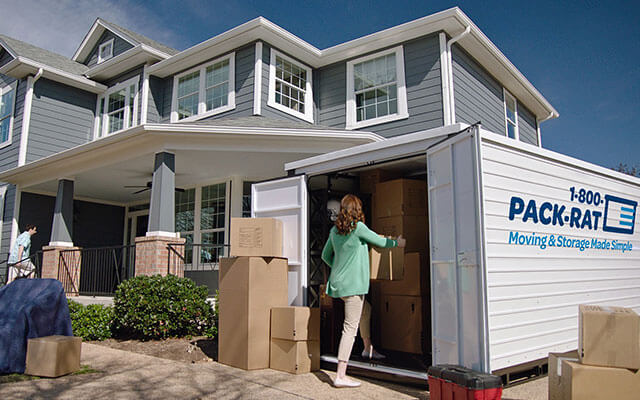
We eliminate the driving completely, unlike most competing solutions, and also allow you all the time you need to pack your belongings. No more having to pack everything all in one morning or afternoon. 1-800-PACK-RAT enables you to minimize packing mistakes and complete everything at your own pace and schedule.
Let us help make moving simple for you today! Give us a call or check out our website for a free quote to get the process started!
Frequently Asked Questions About Packing for a Move
When should you start packing to move?
Give yourself sufficient time to devote to each step of the moving process. The more you leave to the last minute, the more stress you’ll inevitably feel. If possible, start planning your move at least two months in advance of the desired move date. It would be best to start packing for your move at least six weeks before your move date – you can begin with out-of-season items and clothing, or items you don’t use often. Just a few boxes here and there every few days can give you a great head start.
Using 1-800-PACK-RAT’s portable storage containers can help make your move simple and allow you to pack at your own pace. We will bring the moving container to your home, and then you can take as much time as you need to pack your belongings. When you're done, give us a call and we'll pick it up, deliver it to your new home, or store it for as long as you need. Portable storage units make packing for your move simple because they allow you to pack your belongings at your own pace.
Compare that to a traditional moving company or moving truck that forces you to pack everything in one day and move it, and there is no denying portable storage is the simpler way to move.
What should be packed first when moving?
Pack off-season and non-essential items that you won’t need or use in the next few weeks. It is best to start in areas of your home that aren’t used as much, such as the attic, basement, guest room, or other spare rooms. Another good place to start is with artwork and home decor items, as these aren’t necessary for the day-to-day tasks of life.
Where is the best place to start when unpacking?
The first item of business in your new home should be setting up and making up the beds. You don't want to get to the end of a long, tiring moving day and realize your mattress is not ready for you to crash! After the beds, the next stop on your unpacking journey should be the bathroom. Getting this space under control will boost your morning routine, which will give you momentum to tackle other larger areas that need to be unpacked and organized.
The kitchen should be pretty high on the list of rooms to unpack, because the sooner you get it unpacked, the quicker you can cook at home and save money on takeout.
Most importantly, enjoy your new home and the new adventure it brings. Lean on your family and friends when you feel overwhelmed. Those close to you want to help, so don’t be afraid to ask.
Are there any specific techniques for packing fragile items safely?
To pack fragile items safely, use bubble wrap or foam sheets for cushioning. Place these items in sturdy boxes, ensuring they fit snugly to prevent movement. Label the boxes as "Fragile" and avoid overpacking to minimize the risk of breakage during transport. Proper organization is key for a smooth move.
- Moving Tips (133)
- Home Organization (27)
- News Releases (23)
- Packing Tips (21)
- Fun Stuff (19)
- Portable Storage (16)
- In the Community (11)
- Moving and Storage Tips (11)
- Storage Tips (10)
- Moving Checklists (9)
- Household Moving (7)
- Moving Company Comparisons (5)
- Moving on a Budget (5)
- DITY Move (4)
- Home Maintenance Tips (3)
- Home Buying and Selling Tips (1)
- Interstate Moving (1)


